Sozni Embroidery vs. Kani Weaving: Understanding Kashmir’s Two Great Textile Traditions
Sozni Embroidery vs. Kani Weaving: Understanding Kashmir’s Two Great Textile Traditions
What is Sozni Embroidery? (The Fine Needlework)
-
Definition & Technique:
-
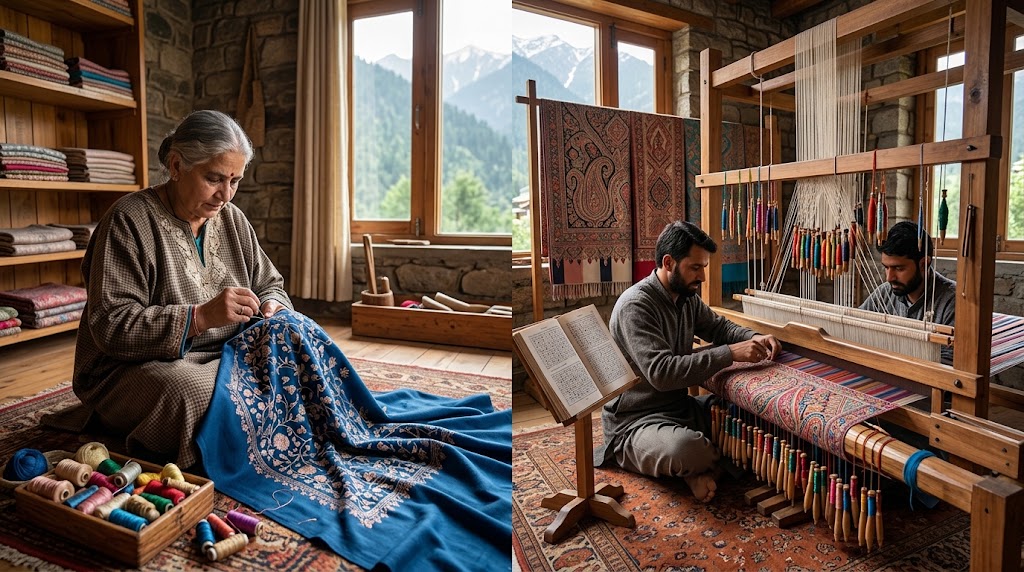
Sozni (also known as Sozni Kaari) is an extremely delicate form of hand embroidery executed with a fine needle and silk or wool threads.
-
-
The Process:
-
Design Carving & Inking: Stamping the design onto a pre-woven plain Pashmina using wooden block prints.
Microscopic Stitching: Artisans work with satin stitches to pierce only the surface of the fabric without piercing deep through, making many pieces nearly reversible.
-
-
Key Visual Characteristics:
-
Intricate, raised thread patterns resting on top of the base fabric.
-
Soft, lightweight feel with subtle or dense motif coverage (from delicate borders to full Jamawar patterns).
-
What is Kani Weaving? (The Bobbin Tapestry)
-
Definition & Technique:
-
Kani is a specialized handloom weaving technique where the pattern is woven directly into the fabric using small wooden bobbins (Kanis) instead of a shuttle.
-
-
The Process:
-
The Talim Code: Master weavers read a coded, color-coded script (Talim) line by line like a musical score.
-
Interlocking Threads: Dozens to hundreds of wooden bobbins carrying colored threads interlock with the warp threads to build the design millimeter by millimeter.
-
-
Key Visual Characteristics:
-
Flat, seamless integration where the pattern and base fabric are one.
-
Distinctive flat back with neat, clipped thread ends showing where color transitions occur.
-
4. Head-to-Head Comparison: Sozni vs. Kani
-
Aesthetic & Feel:
-
Sozni: Textured, tactile embroidery atop a soft base; versatile and flexible drape.
-
Kani: Flat, rich tapestry-like finish; slightly structured weight due to dense weave density.
-
-
Time & Effort Required:
-
Sozni: Ranges from 1–3 months for simple borders to over a year for full Sozni Jamawar.
-
Kani: Exceptional patience required; a full Kani Jamawar can take 12 to 24 months of daily work by two master weavers on a single loom.
-
-
Tools Used:
-
Sozni: Fine steel needle, wooden block prints, silk or fine wool thread.
-
Kani: Wooden bobbins (Kani), handloom, written Talim coded scripts.
-
Value, Price & Investment Potential
-
Rarity Factor: Why authentic Kani shawls often command higher price points due to the extreme skill and time required to read Talim and manage hundreds of bobbins.
-
Artisanal Rarity of Sozni: Why fine, high-density Sozni (micro-stitching) is equally prized as wearable art that can appreciate in value over generations.
-
Heirloom Quality: Both techniques represent non-industrial, sustainable luxury items that outlast modern mass-produced garments.
Conclusion & Final Verdict
-
Summary Thought: Whether you prefer the fine needle precision of Sozni or the ancient coded tapestry of Kani, both represent the peak of Kashmiri textile heritage.
-
Buying Recommendation: Choose Sozni for everyday lightweight elegance or custom embroidery density, and Kani for grand formal occasions, weddings, and serious textile collecting.
-
Call to Action (CTA): Invite readers to comment on their favorite technique or explore a curated collection of handwoven and embroidered shawls.
-
Posted in
kani, pashmina shawls, sozni